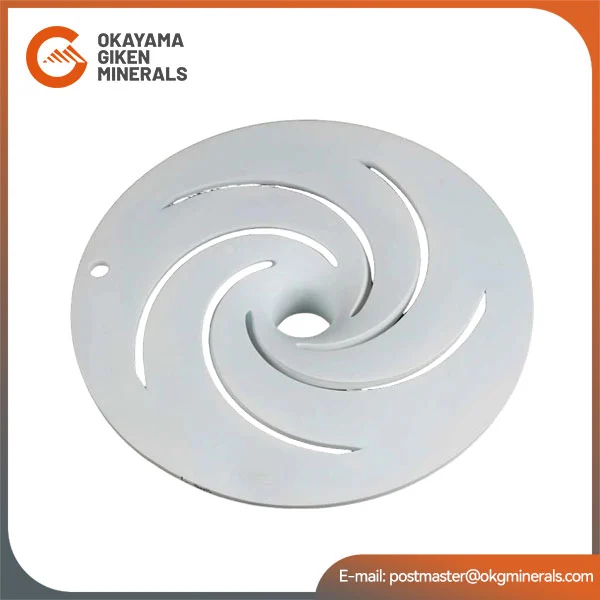
That limitation is now disappearing. Photocuring 3D printing technology for ceramic cores has moved out of the lab and into actual production. No dies required. The core is printed directly from ceramic paste, then debound and sintered.
1. Lead times drop from weeks to under two weeks
Traditional die-making takes anywhere from three weeks to several months. With 3D printing, once the design is approved, you get finished cores in less than two weeks. Need a design change? Print a new one the same day—no waiting for a new die.
2. Complex internal geometry is no longer an issue
Injection molding requires the core to be pulled out of the die, so internal passages can't be too convoluted. 3D printing has no such constraint. You can design cooling channels in any shape that optimizes performance—directly improving blade temperature tolerance and service life.
3. Small batches no longer break the bank
A set of dies can cost anywhere from tens of thousands to hundreds of thousands of dollars. For a run of 50 test cores, that cost per part is absurd. 3D printing has zero tooling cost—making one core or a hundred costs roughly the same per unit. This dramatically lowers the barrier for R&D and prototyping.
This technology has already been validated in real aerospace projects. One military component test program used 3D-printed ceramic cores and has now moved them into pilot production.
Key technical challenges are being actively addressed:
Shrinkage control – sintering still causes some dimensional change, and keeping tolerances tight requires careful process tuning
Strength optimization – print orientation and particle formulation directly affect flexural strength
New materials – water-soluble ceramic cores are an emerging option: after casting, just dip the part in water and the core dissolves away, eliminating harsh chemical leaching. Still being refined, but working samples are already available.
If you're developing new blade designs or need small batches of complex cores, 3D printing is now a practical option worth evaluating. No more tooling constraints. Faster iterations. Lower R&D cost.
For high-volume standard parts, traditional injection molding still wins on per-unit cost and speed. But for complex geometries and rapid development cycles, the balance has tipped.